
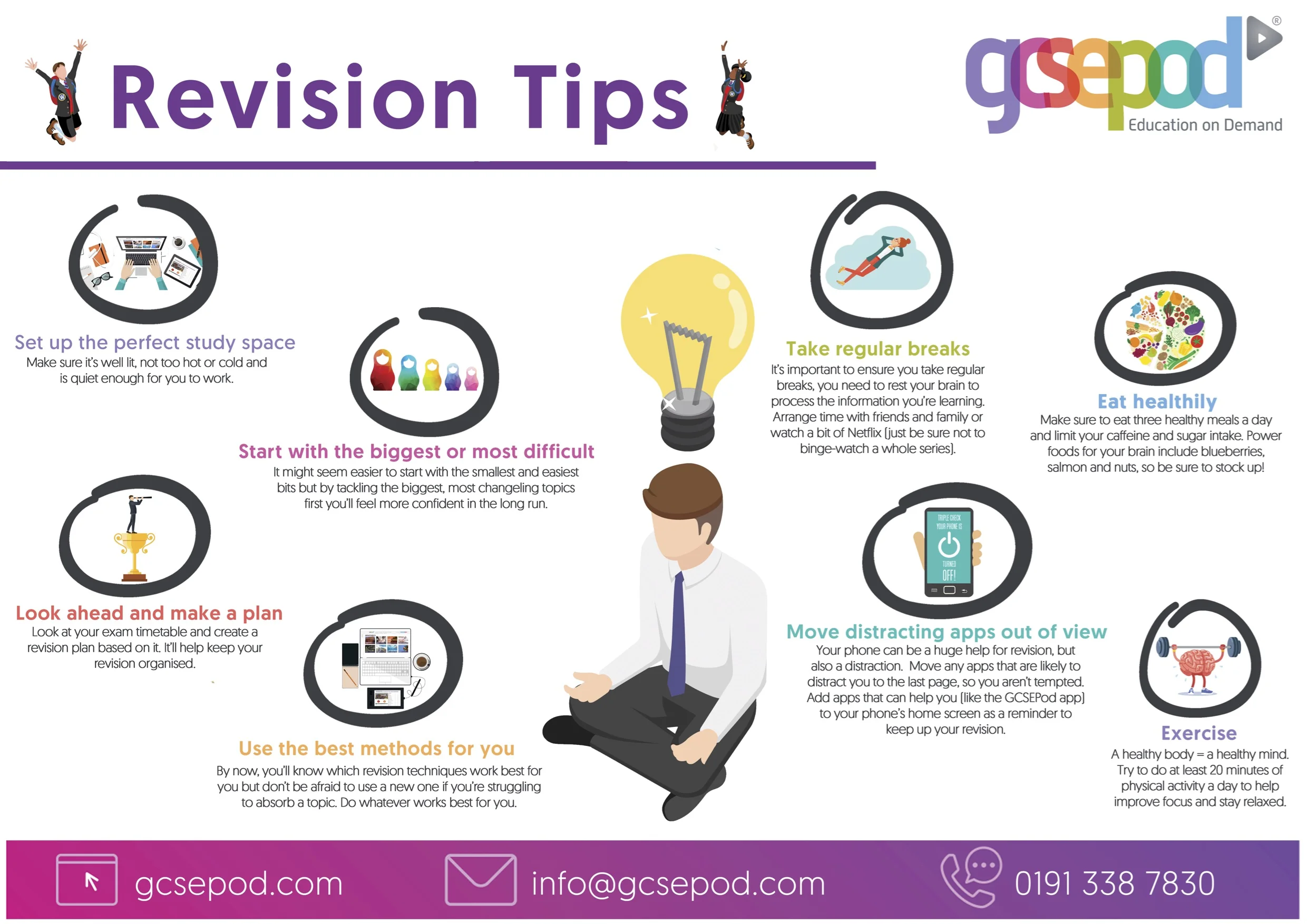
There’s no single “best” way to study. Everyone’s brain learns differently. Some people remember pictures, others words, some need movement, and some need sound. Knowing your learning style helps you revise smarter — not longer — and makes information actually stick.
Let’s start with visual learners. You’re the ones who think in color and form. You remember images, diagrams, charts. For you, revision works best when information is organized visually. Instead of long notes, try mind maps or flowcharts. Use colors to group related ideas — blue for theories, green for examples, red for key terms. Visual anchors help your brain recall details faster. Replace walls of text with diagrams. If you can see it, you can usually recall it.
Auditory learners, on the other hand, absorb through listening. Reading silently might bore you; lectures stick better. Record yourself explaining topics aloud and play them during commutes or walks. Discuss concepts with classmates — hearing yourself talk about the subject rewires memory in deeper ways. You can even turn notes into short “audio lessons.” It’s like being your own podcast host.
Then there are kinesthetic learners. You learn by doing. Sitting still for hours makes your mind wander. To revise effectively, combine movement with study. Walk around while reading flashcards. Write key terms on sticky notes and move them around your room in logical order. Practice sample problems physically, not just mentally. Engage your body — it keeps your mind anchored.
Reading/writing learners love lists and structured text. For you, rewriting notes, summarizing chapters, and organizing essays by outline format works best. The act of writing helps retention. But add variety — reading aloud or drawing diagrams can reinforce your main method.
Of course, most people are hybrids — a mix of two or three styles. So the best revision plan combines multiple senses. For example, study by reading (visual), then explain aloud (auditory), then quiz yourself (active recall). Each step strengthens different neural pathways, making recall stronger.
Spacing and repetition matter for all styles. Reviewing once isn’t enough. Instead, revisit topics at increasing intervals: after one day, three days, a week, and a month. That pattern, called spaced repetition, prevents forgetting. Flashcards or digital apps can automate it.
Chunking helps too. The brain hates overload. Split material into small, logical pieces. Revise one section at a time, take a break, then move on. You’ll retain far more than cramming an entire textbook overnight.
And don’t underestimate self-testing. No matter your style, testing forces retrieval. It’s one of the most reliable ways to strengthen long-term memory. Even writing your own mini-quiz works wonders.
Final Thought:
Your brain has its own rhythm — learn it. When you study in sync with your natural style, revision becomes easier, faster, and more enjoyable. Experiment, mix methods, and remember: it’s not how long you study, it’s how right you study.
