
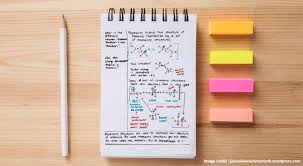
Good notes are the backbone of great studying. But let’s be honest — most of us don’t take notes; we just copy slides word for word. Effective note-taking isn’t about transcription. It’s about understanding and organizing information so your brain can recall it later.
Start by deciding why you’re taking notes. Is it to capture everything the professor says? Or to create a review tool for later? When you know the purpose, you can choose the right style.
One popular method is the Cornell system. Divide your page into three sections: a narrow column on the left for keywords or questions, a large space on the right for main notes, and a summary box at the bottom. After class, fill the summary section with what you understood. This system forces review right away, which builds memory.
If you’re a visual thinker, try mind mapping. Put the main topic in the center and branch out into related ideas. Use arrows, doodles, and colors. Mind maps mirror how the brain connects concepts — perfect for complex subjects like biology or history.
For fast-paced lectures, use abbreviations and symbols. Write “w/” for “with,” “b/c” for “because,” arrows for cause-and-effect. Speed matters more than grammar. Later, you can rewrite the notes neatly if needed.
Technology can help, but be careful. Typing is faster, but research shows handwriting improves comprehension because it forces you to process information as you write. If you must type, avoid verbatim notes — paraphrase key points in your own words.
During review sessions, turn notes into questions. Instead of reading passively, cover the right side of your Cornell page and quiz yourself from the left column. That’s active recall in disguise.
After each class, spend ten minutes reorganizing or summarizing your notes. It’s short but powerful — your brain cements what it just learned, and you’ll thank yourself later during exams.
Color coding also helps. Pick one color for definitions, one for examples, another for formulas. The goal isn’t to make your notes pretty; it’s to make scanning easier when you’re stressed before finals.
Finally, don’t hoard notes. Review them weekly. Update, condense, and discard what’s irrelevant. The more you engage with your notes, the less intimidating they’ll be come exam time.
Final Thought:
Great notes don’t just record information — they organize your thoughts. Whether you prefer structured outlines or messy sketches, make your notes work for you. A little structure now saves hours of frustration later.
