
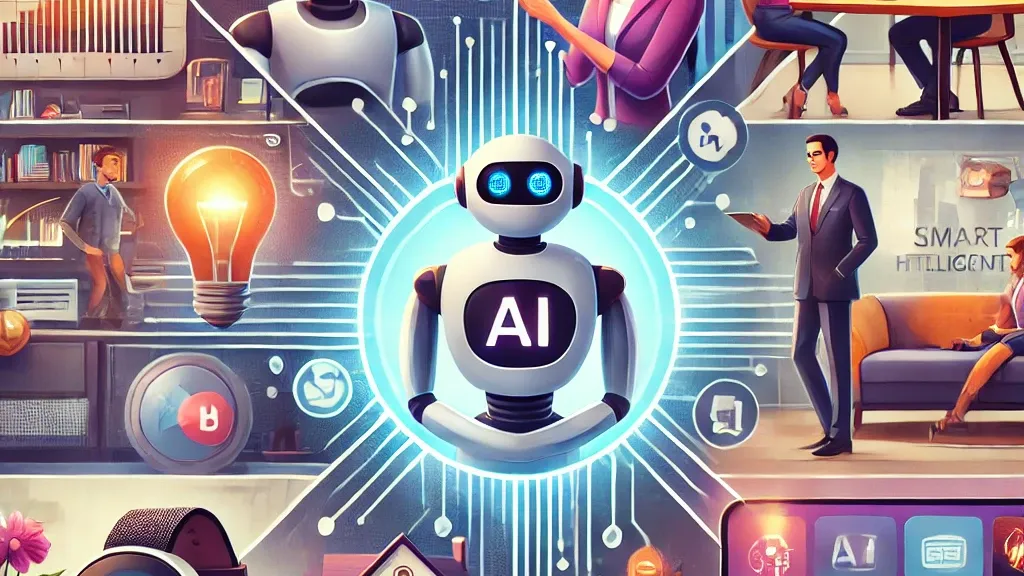
Artificial intelligence has entered a new phase of development in 2026 with the rapid rise of AI agents. Unlike traditional AI tools that simply respond to commands, AI agents can perform tasks independently, make decisions based on available information, and complete multi-step workflows with minimal human intervention. This shift is changing how businesses operate, how professionals work, and how people manage everyday activities.
From customer support and software development to healthcare and education, AI agents are becoming valuable digital assistants capable of improving productivity and reducing repetitive work. Organizations around the world are investing heavily in AI-powered automation to remain competitive while improving efficiency.
Although AI agents offer significant opportunities, they also introduce new challenges related to security, privacy, governance, and ethical decision-making. Understanding how these intelligent systems work is becoming increasingly important for businesses and individuals alike.
What Are AI Agents?
An AI agent is an intelligent software system designed to complete goals with a certain level of autonomy. Unlike traditional chatbots that simply answer questions, AI agents can analyze information, create plans, perform actions, monitor progress, and adapt their behavior based on new data.
For example, an AI agent can:
- Schedule meetings
- Analyze business reports
- Respond to customer inquiries
- Generate documents
- Monitor cybersecurity alerts
- Manage workflows
- Assist with research
- Organize digital information
Many AI agents combine large language models with external tools, databases, and software applications, allowing them to perform increasingly complex tasks.
Why AI Agents Are Growing Rapidly
Several technological developments have accelerated the adoption of AI agents.
Large language models have become more capable of understanding context and generating accurate responses. Cloud computing provides scalable computing power, while improved APIs allow AI systems to interact with business software, productivity platforms, and enterprise databases.
Organizations are also facing increasing pressure to improve efficiency without significantly expanding their workforce. AI agents help automate repetitive tasks, allowing employees to focus on strategic and creative work.
As businesses seek greater productivity, AI agents are becoming practical solutions rather than experimental technologies.
Transforming the Modern Workplace
One of the biggest impacts of AI agents can be seen in the workplace.
Instead of replacing employees, many organizations use AI agents to support daily operations. Administrative work that previously required several hours can now be completed much faster.
Employees use AI agents for:
- Writing reports
- Creating presentations
- Summarizing meetings
- Conducting research
- Organizing emails
- Managing schedules
- Drafting documentation
This assistance allows professionals to dedicate more time to decision-making, innovation, and collaboration.
AI Agents in Customer Service
Customer service has become one of the fastest-growing applications for AI agents.
Modern AI systems can answer customer questions, process service requests, recommend solutions, and escalate complex cases to human representatives when necessary.
Businesses benefit from:
- Faster response times
- 24/7 customer support
- Improved customer satisfaction
- Lower operational costs
- Consistent service quality
Human support remains essential for sensitive or highly complex situations, but AI agents significantly improve overall efficiency.
Healthcare Applications
Healthcare organizations are increasingly exploring AI agents to assist medical professionals.
These systems can help organize patient records, summarize clinical information, schedule appointments, and support administrative tasks.
Researchers also use AI agents to review scientific literature, analyze medical data, and identify research patterns more efficiently.
Importantly, AI agents support healthcare professionals rather than replace medical expertise. Final clinical decisions continue to require qualified human judgment.
Education and Personalized Learning
Educational institutions are adopting AI agents to create more personalized learning experiences.
Students receive assistance with:
- Homework explanations
- Language learning
- Study planning
- Research support
- Practice exercises
Teachers benefit from automated grading assistance, lesson preparation, and administrative support.
Universities are also using AI agents to improve student services by answering common questions regarding admissions, schedules, and academic resources.
AI Agents in Software Development
Software developers increasingly rely on AI agents to accelerate coding tasks.
AI-assisted development includes:
- Code generation
- Bug detection
- Documentation writing
- Software testing
- Performance optimization
- Security analysis
Rather than replacing programmers, AI agents reduce repetitive work and help developers focus on system architecture and complex problem-solving.
Improving Business Productivity
Businesses across multiple industries are integrating AI agents into everyday operations.
Finance teams automate reporting.
Marketing teams generate campaign ideas.
Human resources departments streamline recruitment processes.
Supply chain managers monitor inventory.
Sales teams analyze customer data.
Legal departments organize documentation.
By reducing manual work, organizations improve operational efficiency while allowing employees to focus on higher-value responsibilities.
Security and Privacy Considerations
As AI agents gain greater access to organizational systems, cybersecurity becomes increasingly important.
Businesses must ensure AI agents operate securely by implementing:
- Strong authentication
- Role-based access controls
- Data encryption
- Continuous monitoring
- Audit logging
- Secure software integration
Organizations also need clear policies regarding data privacy, especially when AI agents process sensitive customer or business information.
Responsible deployment builds trust while reducing security risks.
Ethical Challenges
The rapid growth of AI agents also raises important ethical questions.
Organizations must consider:
- Transparency
- Accountability
- Bias prevention
- Human oversight
- Responsible decision-making
Users should understand when they are interacting with AI systems and how automated decisions are made.
Maintaining human supervision over critical decisions helps ensure fairness and accountability.
The Future of AI Agents
The capabilities of AI agents will continue expanding throughout the coming years.
Future systems may collaborate with one another to complete complex projects, coordinate business operations, and provide increasingly personalized assistance.
Advances in reasoning, memory, and multimodal AI will likely make these agents more effective across industries.
However, successful adoption will depend not only on technological innovation but also on responsible governance, cybersecurity, and ethical implementation.
Organizations that invest in training employees alongside AI technologies will be better prepared for this evolving digital landscape.
Preparing for an AI-Driven Future
Businesses should begin developing strategies that balance innovation with responsibility.
Key priorities include:
- Investing in employee AI literacy
- Establishing AI governance policies
- Protecting sensitive information
- Monitoring AI performance
- Maintaining human oversight
- Regularly reviewing ethical considerations
Preparing today enables organizations to benefit from AI while minimizing potential risks.
Conclusion
The rise of AI agents represents one of the most significant technological developments of 2026. These intelligent systems are transforming workplaces, improving productivity, enhancing customer service, supporting education, and streamlining business operations across numerous industries.
